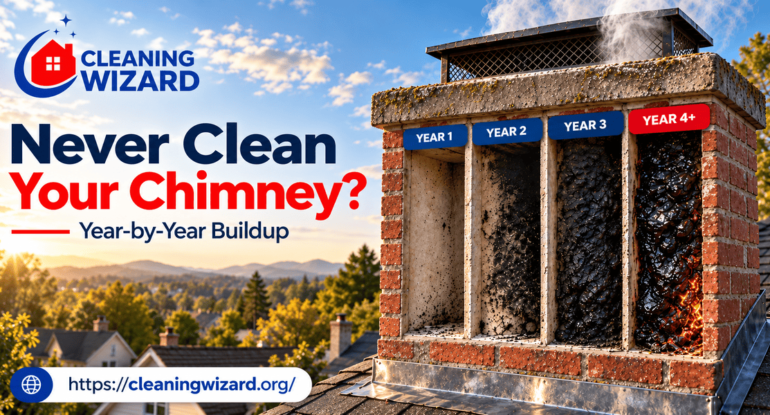
What Happens If You Never Clean Your Chimney? A Year-by-Year Look at Buildup
Do you know that “Your chimney doesn’t break all at once. It gets a little dirtier every time you strike a match.” Soot and creosote continue to accumulate in the chimney flue if you don’t clean your chimney. As time goes on, your draft weakens, smoke begins to return to the room, and the risk of a chimney fire increases. The difficult part is how slowly it happens, so most people don’t realize something is not right until they feel it.
This is where Cleaning Wizard is here to help. We are a licensed, insured team with many years of experience in cleaning chimneys around Chicago. So, here is what will be covered in the blog: how buildup changes throughout the year, warning signs to look out for, when to sweep, and what a pro visit looks like.
Year One: It Starts Small
The first season of fires makes a difference, even if the flue appears to be in good condition from the hearth. The smoke cools as it rises, and some of it sticks to the walls. Adjusting the frequency of burning, the type of wood used, and the age of the system can help.
- Light soot:
A dusty, powdery coating accumulates on the smoke shelf, damper, and walls of the flue. It is currently simply swept by a basic brush sweep in a quick manner.
- A thin creosote film:
Creosote is a combustible by-product of wood combustion. It starts out as a thin coat, forming wherever smoke cools off and condenses on the flue.
- Stuff from outside:
Leaves and twigs are constantly falling into an open chimney, as well as pine needles. Before there is much soot, they add fuel and hinder airflow.
- A slight odor:
Have you ever been at a campfire and noticed a slight odor? That’s an early sign of deposits that are coming in, and a lot of folks just shrug it off.
- An easier job:
Light dusting takes less labor than a chimney packed with glazed creosote, compacted ash, or nests. Catch it early, and the whole visit stays simple.
Years Two and Three: Things Get Noticeable
Skip the sweep and every fire stacks another layer on the last one. The flue gets tighter, and your fireplace starts to show it.
- Soot past 1/8 inch:
CSIA says to sweep a masonry fireplace once soot reaches about 1/8 inch. Anything thicker than that means your chimney is already overdue.
- A weaker draft:
Smoke has difficulty rising on the narrow walls of the flue. Fires become more difficult to light and to maintain at a steady rate.
- Draft stops working:
Smoke may flow back through the living room when the draft is not working as it should.
- Oily black flakes:
Dark brown creosote begins to flake and fall on the firebox bottom. Very clear indication that the deposits are getting thicker up inside.
- Unwanted guests:
Birds and small animals are attracted to a dark, sheltered flue. When scratching noises are heard, or nesting material is spotted in the firebox, it is possible that there is already a blockage.
Year Four and Beyond: Now It’s a Safety Problem
After a few seasons, those soft deposits can turn hard. This is the point where a neglected chimney stops being messy and becomes a real hazard.
- Glazed creosote:
It’s a hard, shiny coating that sticks tight to the flue and burns easily. Getting it off takes far more effort than sweeping light, powdery soot.
- Real fire risk:
Dried creosote, leaves, and nests all work as fuel. A flare-up can reach very high temperatures inside the flue before you even know it’s happening.
- Carbon monoxide:
Blockages and poor draft can push smoke and carbon monoxide into the rooms you live in. And you can’t see or smell carbon monoxide, which makes it worse.
- Full blockages:
A thick plug of nests, debris, and fallen creosote can choke the chimney opening. Then combustion gases have nowhere to go except back into your room.
- Hidden wear:
Deterioration can show up even in chimneys that rarely get used. That’s why a yearly inspection matters more than how many fires you actually light.
How to Stop the Story Early: Inspect Yearly, Sweep When Needed
The best part is, you can end all of this right in year one. The NFPA 211 guidance recommends that chimneys, fireplaces, and vents be inspected at least annually and cleaned when the deposit or blockage requires it. An inspection involves checking the accessible parts for buildup, damage, and blockages. A cleaning actually removes the soot, creosote, ash, and debris.
A pro visit usually covers:
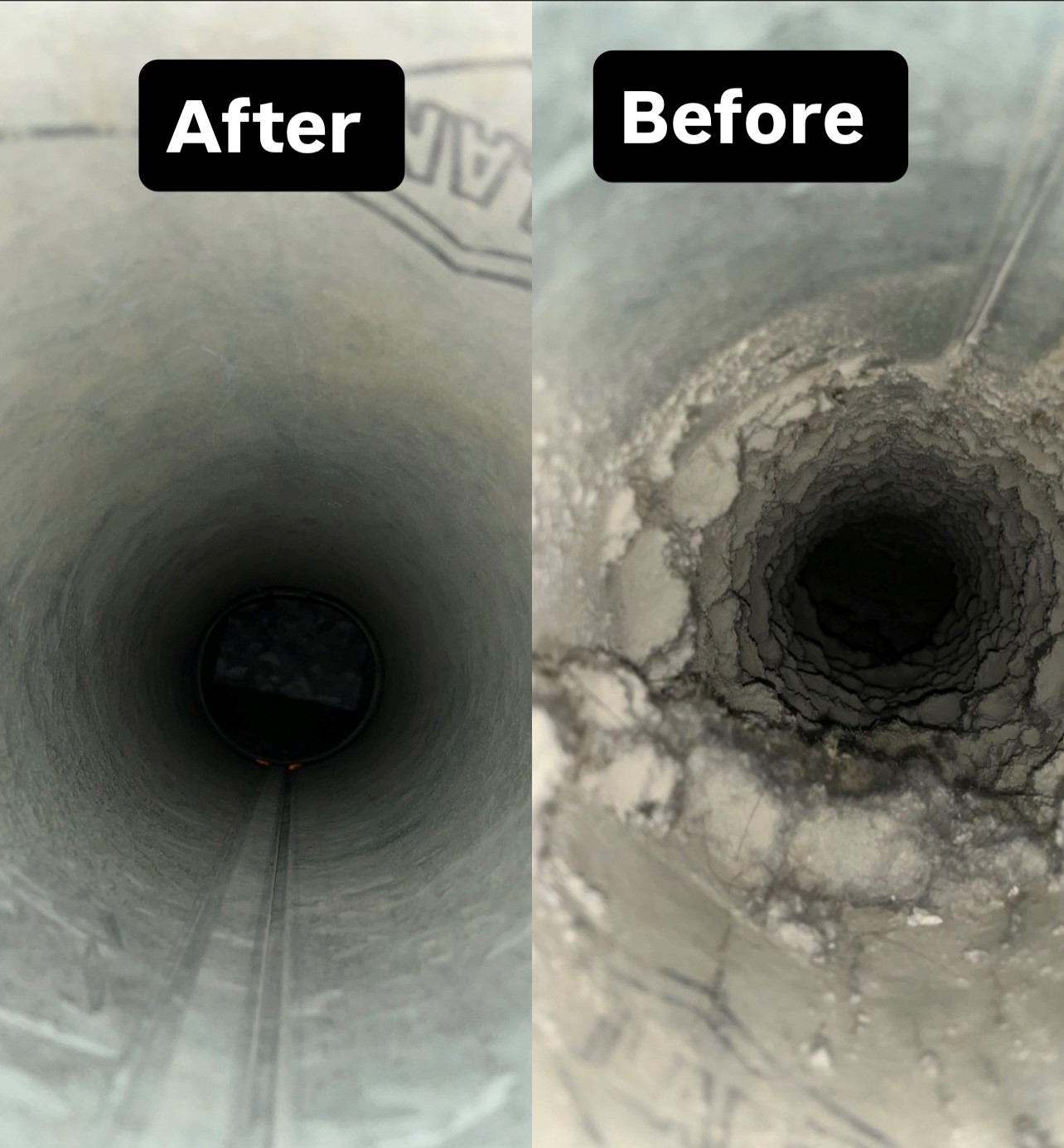
- Full brush cleaning of the flue and firebox
- Soot, ash, and accessible creosote removal
- Clearing out leaves, pine needles, and accessible nests
- Cleaning the damper plate and smoke shelf
- A visual check for visible buildup and obvious masonry concerns
Worried about the mess? Fair question. HEPA vacuums, drop cloths, and a sealed fireplace opening keep soot out of your living room, and the work area gets vacuumed before the crew leaves. Cleaning Wizard’s chimney cleaning starts at a very reasonable price, and the final price depends on how much buildup is there.
Locations Cleaning Wizard Covers
For over 12 years, we’ve served the Chicago area, and we handle chimney cleaning in Chicago, Naperville, Schaumburg, Elmhurst, Evanston, Hinsdale, Romeoville, Oakbrook, Highland Park, Crystal Lake, and Milwaukee. We also offer air duct and dryer vent cleaning, plus 24/7 emergency service.
Final Thoughts
When you don’t clean your chimney regularly, it slowly fills with smoke until you are compelled to do something by odor, smoke, or a blowout. That slow pace is what makes it dangerous. It’s easy to keep it simple if you inspect it once a year and sweep it when it’s time. Cleaning Wizard is a reliable chimney cleaning company in Chicago that can provide you with a free quote for the job. Check out our website for other cleaning and repair services. Schedule a free consultation and get your estimate now!
FAQs
Q1. How often should a chimney be inspected by a professional?
NFPA 211 guidance says chimneys, fireplaces, and vents should be inspected at least once a year. Cleaning is then done when soot, creosote, or debris make it necessary.
Q2. What happens if creosote is never removed from your flue?
It hardens into a glazed, tar-like layer that burns easily and narrows the flue. That raises the chance of a chimney fire and can push smoke and carbon monoxide into your home.
Q3. Do I need chimney cleaning if I rarely use my fireplace?
Possibly. Animals can nest, and debris can enter even when you rarely burn. A yearly inspection shows whether your chimney needs cleaning or other maintenance.
Q4. How much does chimney cleaning cost with Cleaning Wizard?
Cleaning Wizard’s chimney cleaning starts at $199. The final price depends on access, the amount of soot or creosote, and any extra work needed after the technician’s check.
Q5. Which areas does Cleaning Wizard serve for chimney sweeps?
Cleaning Wizard serves Chicago, Naperville, Schaumburg, Elmhurst, Evanston, Hinsdale, Romeoville, Oakbrook, Highland Park, Crystal Lake, and Milwaukee.

Leave A Comment
You must be <a href="https://cleaningwizard.org/wp-login.php?redirect_to=https%3A%2F%2Fcleaningwizard.org%2F2026%2F10%2F08%2Fwhat-happens-if-you-never-clean-your-chimney-a-year-by-year-look-at-buildup%2F">logged in</a> to post a comment.