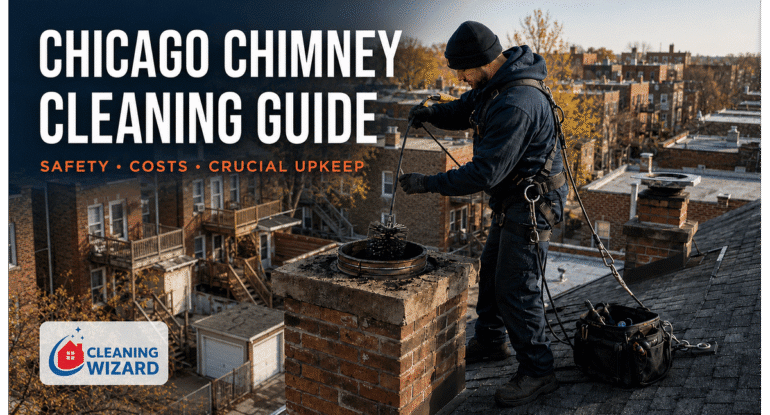
Chicago Homeowner Guide to Chimney Cleaning: Safety, Costs, and Crucial Upkeep
Few things are more comforting than a warm fireplace during a freezing Chicago winter. Behind that cozy fire, however, is a chimney that handles smoke, heat, gases, and combustion byproducts every time you burn wood. Over time, soot, creosote, debris, and other materials can accumulate inside the flue and affect proper ventilation.
Homeowners asking “How do I know if my chimney needs to be cleaned before winter?” should watch for warning signs such as visible creosote, smoky odors, poor draft, excessive soot, animal nests, or debris inside the chimney.
The Chimney Safety Institute of America (CSIA) follows NFPA guidance recommending that chimneys, fireplaces, and vents be inspected at least once a year and cleaned when necessary. Regular maintenance helps identify potential problems before they become serious safety concerns.
What Is Creosote and Why Is It Dangerous?
Creosote is a natural byproduct of burning wood. As smoke and combustion gases travel through a cooler chimney, some materials can condense and stick to the interior walls of the flue.
Creosote can appear as powdery soot, flaky deposits, sticky tar-like material, or hard glazed buildup. Because creosote is combustible, excessive accumulation can increase the risk of a chimney fire.
Homeowners should watch for signs such as:
- A strong smoky or creosote-like odor
- Dark flakes or crusty deposits around the fireplace
- Excessive soot buildup
- Poor fireplace draft
- Smoke entering the living space
If you notice these warning signs, professional inspection and cleaning may be necessary before using the fireplace regularly.
The Different Types of Creosote Buildup
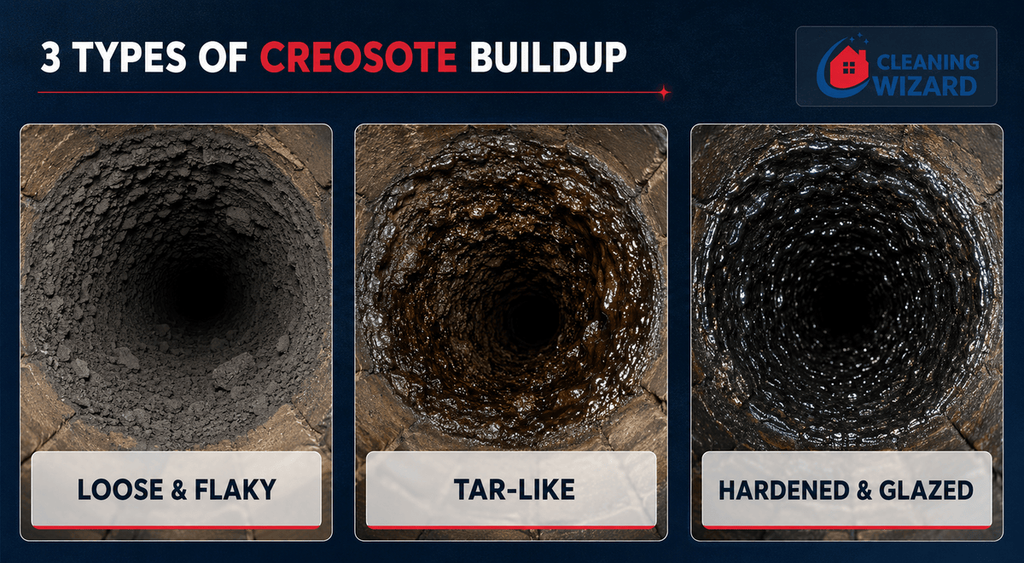
Creosote buildup can vary in appearance and severity:
- Loose or Flaky Deposits: Powdery soot and loose flakes are generally easier to remove with standard professional brushing.
- Crusty or Tar-Like Deposits: These deposits adhere more firmly to chimney surfaces and may require more thorough cleaning.
- Hardened or Glazed Creosote: Dense, hardened deposits can be difficult to remove and may require specialized professional equipment.
The appropriate cleaning method depends on the condition and severity of the buildup.
What Else Can Hide in Your Chimney?
Creosote is not the only potential chimney obstruction. A damaged or missing chimney cap can allow outside materials and animals to enter the flue.
- Natural Debris: Leaves, twigs, and other debris can accumulate inside an unprotected chimney.
- Animal Nests: Birds, squirrels, and other animals may build nests inside chimneys, creating dangerous blockages.
- Masonry Damage: Cracked bricks, deteriorated mortar, or damaged flue components can affect the chimney’s condition.
Blockages can interfere with proper venting and may prevent combustion gases from safely exiting the home. Professional chimney cleaning can help identify and remove debris, nests, and other obstructions.
Benefits of Routine Chimney Maintenance
Regular inspection and cleaning when necessary can provide several important benefits:
- Fire Safety: Removing excessive creosote and combustible debris helps reduce potential chimney-fire hazards.
- Better Ventilation: A clear chimney allows combustion gases to vent properly.
- Reduced Carbon Monoxide Risk: Identifying blockages and venting problems can help reduce the risk of combustion gases entering the home.
- Chimney Protection: Regular maintenance can help identify damaged masonry, liners, and other components.
- Peace of Mind: Professional maintenance helps homeowners prepare their fireplace for the winter season.
When Should You Schedule a Chimney Cleaning?
The National Fire Protection Association (NFPA) recommends that chimneys, fireplaces, and vents be inspected at least once a year to identify hazards and determine whether cleaning is necessary.
Late summer or early fall can be a convenient time for Chicago homeowners to schedule chimney maintenance before regular winter fireplace use begins.
How often your chimney actually needs cleaning depends on several factors:
- Wood Selection: Burning properly seasoned firewood can help reduce excessive creosote formation.
- Frequency of Use: Frequently used fireplaces may accumulate deposits faster.
- Fireplace Design: Different fireplace and chimney systems have different maintenance requirements.
If you cannot remember when your chimney was last inspected, scheduling a professional inspection before winter can help determine whether cleaning is needed.
What Is the Average Chimney Cleaning Cost in Chicago?
Chicago chimney cleaning prices vary depending on the chimney’s height, accessibility, condition, fireplace type, and amount of soot or creosote buildup.
Other factors may include animal nests, debris, multiple flues, or additional cleaning requirements.
Cleaning Wizard’s chimney cleaning service starts at $199.
The final price may vary depending on the specific condition and requirements of the chimney. Contact Cleaning Wizard for a quote based on your home and chimney system.
Professional Chimney Cleaning in Chicago
A professional chimney cleaning does not have to leave your living room covered in soot. Experienced technicians use protective drop cloths, containment methods, and professional vacuum equipment to help keep the work area clean.
Cleaning Wizard provides professional chimney cleaning in Chicago and nearby communities, including Naperville, Schaumburg, Elmhurst, Evanston, Hinsdale, Romeoville, Oak Brook, Highland Park, and Crystal Lake.
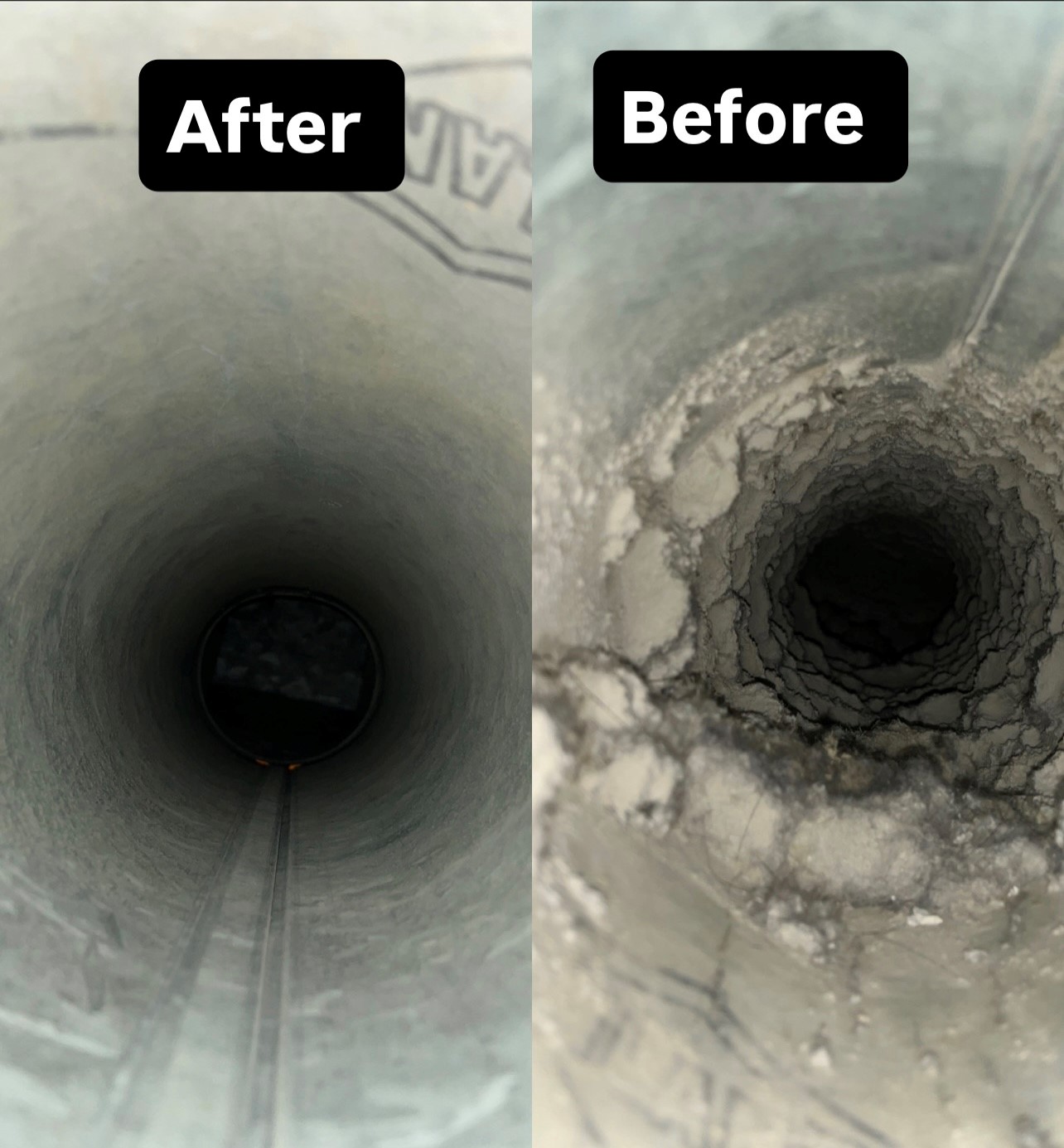
Our experienced technicians use professional equipment to remove soot, creosote, ash, and debris while taking steps to protect your home during the service.
Schedule Chimney Cleaning Service with Cleaning Wizard today.
Conclusion
A clean, properly maintained chimney can help your fireplace operate safely and efficiently throughout the Chicago winter. Regular inspection can identify creosote buildup, blockages, animal nests, and other problems before they become more serious.
If you notice smoky odors, poor draft, visible buildup, or simply cannot remember the last time your chimney was inspected, it may be time to schedule professional service.
Chimney cleaning starts at $199 with Cleaning Wizard.
Contact Now to schedule professional chimney cleaning in Chicago and prepare your fireplace for winter.
Frequently Asked Questions About Chimney Cleaning
1. How long does a professional chimney cleaning take?
A standard chimney cleaning typically takes 45 to 90 minutes, depending on chimney height, accessibility, fireplace type, and the amount of buildup or debris.
2. Will a professional chimney sweep make a mess in my living room?
Professional chimney sweeps use protective drop cloths and specialized vacuum equipment to help contain soot and debris and keep the surrounding area clean.
3. Do I still need a cleaning if I have a gas fireplace?
Yes. Gas fireplaces produce less soot and creosote, but annual inspections can identify blockages, animal nests, debris, or other venting problems. Cleaning is recommended when buildup or an obstruction is found.
4. How often should a chimney be cleaned?
Chimneys should be inspected at least once a year, while cleaning should be performed when necessary based on fireplace use, fuel type, chimney condition, and the amount of buildup.
5. Can I clean my chimney myself?
Chimney cleaning can be risky and may not remove stubborn creosote effectively. Professional cleaning ensures proper equipment, thorough cleaning, and identification of potential chimney problems.
6. What is the difference between a chimney inspection and cleaning?
An inspection evaluates the chimney for structural problems, blockages, and other safety concerns. Cleaning physically removes soot, creosote, and debris from the chimney.

Leave A Comment
You must be <a href="https://cleaningwizard.org/wp-login.php?redirect_to=https%3A%2F%2Fcleaningwizard.org%2F2026%2F08%2F27%2Fchicago-homeowner-guide-to-chimney-cleaning-safety-costs-and-crucial-upkeep%2F">logged in</a> to post a comment.