The Most Common HVAC Repair Scams Happening This Summer
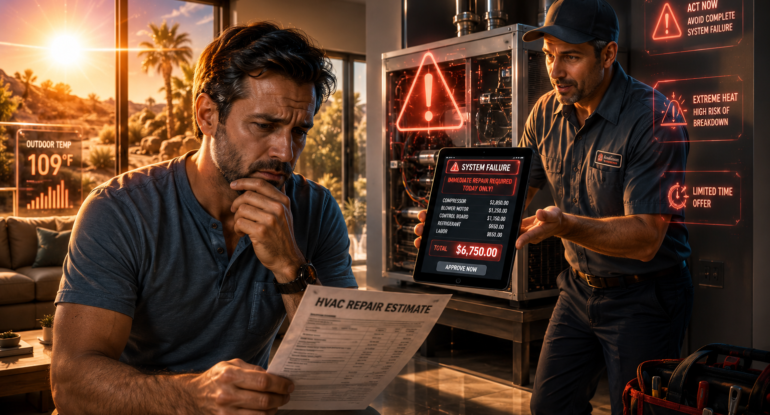
Summer puts HVAC systems under real stress and when temperatures spike, repair demand rises right along with homeowner panic. That combination makes people easier targets for smooth sales talk, vague diagnoses and “fix it now” pressure. The danger is not just paying too much. A scam can leave you with unnecessary repairs, recurring service charges or a system replacement you never actually needed.
This guide will help you spot the most common HVAC repair scams and avoid getting burned when you need cooling the most.
Quick Answers
Use a simple scam filter before saying yes to any repair:
- Ask for a written diagnosis and full price breakdown.
- Get a second opinion for costly repairs or full replacement recommendations.
- Verify the contractor’s license, reviews and company credentials.
- Ask the technician to show the failed part, test result or leak evidence before work begins.
- Insist on documentation and do not approve immediate large repairs without.
The Problem: Why HVAC Scams Increase in Summer
When the AC quits on a hot day, most homeowners are thinking about comfort first and due diligence second. The Arizona Attorney General’s office specifically warned that families become desperate to get cooling restored quickly which makes high-pressure tactics more effective. That is why homeowners should work with trusted professionals who provide transparent diagnostics and reliable HVAC repair services instead of rushing into expensive repairs.
Here is why scam activity tends to spike in summer:
- Emergency conditions lead to rushed decisions.
- High temperatures increase AC failures and service demand.
- Homeowners often do not have time to compare providers carefully.
- Fraudulent technicians use the season to cash in with urgency, fear and “today only” offers.
Most Common HVAC Repair Scams
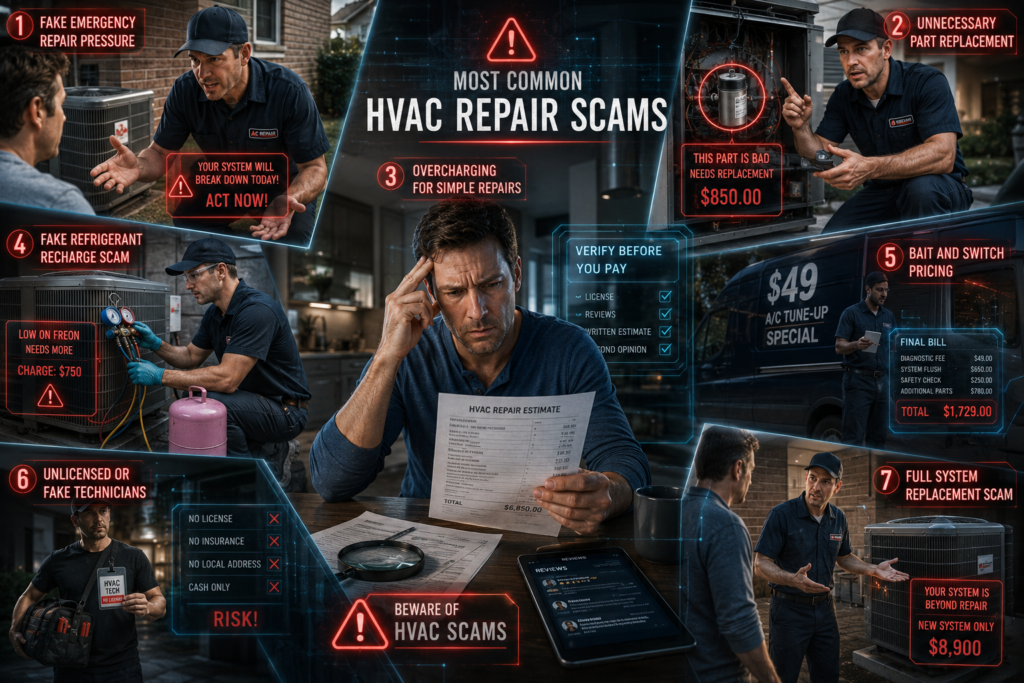
1. Fake “Emergency Repair” Pressure Scam
This one starts with drama. A technician claims your system is on the verge of total failure and says you must approve a major repair immediately.
That pressure is a red flag. Consumer alerts warn homeowners to be wary of contractors who use urgency to push expensive work before the customer has time to review options or get another opinion.
2. Unnecessary Part Replacement Scam
A dishonest technician may declare a working capacitor, blower motor, contactor or control board “bad” without showing any real testing. Missouri’s Attorney General warned that some companies claim functional parts need replacement, then quote such high prices that a new system suddenly looks like the “better deal.”
If a part is truly defective, the technician should be able to explain the failure in plain language and show you evidence.
3. Overcharging for Simple Repairs
A clogged drain line, dirty filter, loose wire or faulty thermostat can be framed as a major system failure if the homeowner does not know what questions to ask. That is how small fixes turn into oversized invoices.
4. Fake Refrigerant Recharge Scam
Low cooling does not automatically mean your system just “needs more refrigerant.” Scammy contractors often sell recharge after recharge without identifying the underlying issue, even though repeated top-offs do not solve a leak problem.
A trustworthy technician should check for leaks, measure system performance properly and explain why refrigerant levels changed in the first place. That is one reason refrigerant leak detection is such an important question to ask.
5. Bait and Switch Pricing
This scam starts with a tempting ad, maybe a cheap tune-up, a low diagnostic fee or an unbelievable repair special. Once the technician arrives, the final bill grows with add-ons, mandatory upgrades or hidden service charges.
If the original price cannot be honored, stop and ask for a revised written estimate before any work continues.
6. Unlicensed or Fake Technicians
Some operators show up with no valid license, weak credentials or no real local business footprint. That leaves homeowners exposed to poor workmanship, damaged equipment and zero accountability if the repair goes wrong.
For that reason, HVAC contractor red flags should always include missing license details, vague company names and cash-only requests.
7. Full System Replacement Scam
One of the costliest scams is the instant replacement pitch. The unit is labeled “beyond repair” after a quick glance and the homeowner is pushed toward a new installation without load calculations, full diagnostics or repair alternatives.
Always pause when someone jumps to a replacement before explaining the actual fault. In many cases, the smarter move is a second opinion from another licensed contractor.
Top Warning Signs of an HVAC Scam
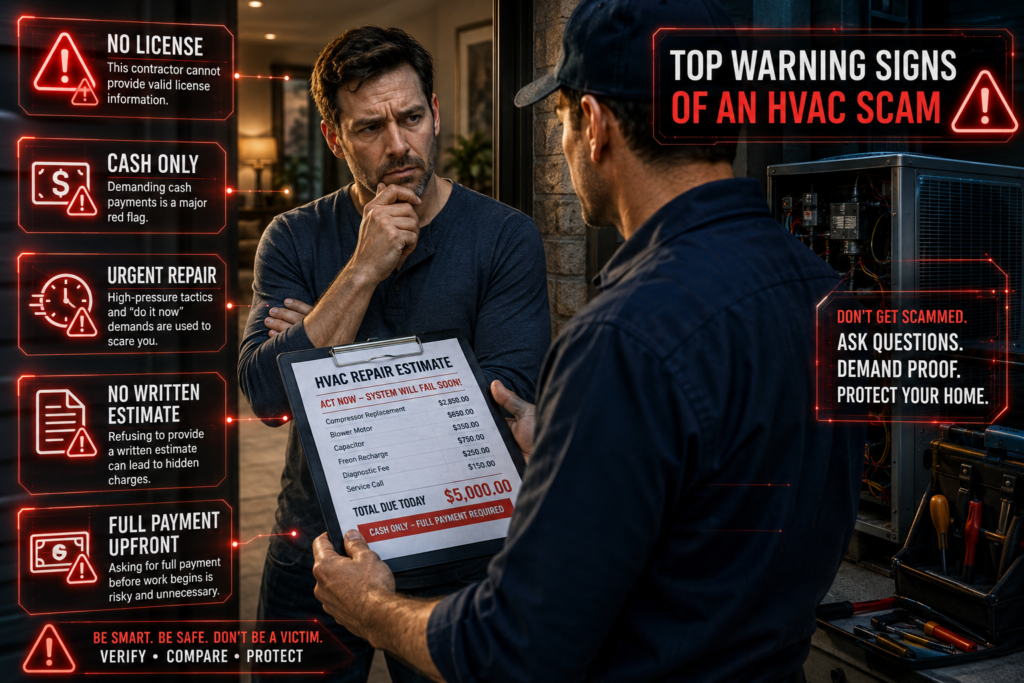
Watch for these common warning signs:
- High-pressure sales tactics and “approve it now” language.
- No written estimate, invoice or scope of work.
- Refusal to explain the problem clearly or show proof.
- No license, branded company details or verifiable reviews.
- Cash-only demands or requests for full payment up front.
How Homeowners Can Protect Themselves
A little patience can save a lot of money. The safest approach is to slow the process down and make the technician prove the problem before you approve the fix.
- Get 2 to 3 quotes for major repairs or replacement recommendations.
- Ask for written diagnostics, itemized pricing and warranty details.
- Verify licenses and check third-party reviews, not just testimonials on the company website.
- Request to see the damaged part, leak evidence or failed reading.
- Do not approve immediate large repairs without documentation.
What to Do If You Suspect a Scam
Stop the service before more work is done and document everything, including photos, invoices, text messages and any parts removed from the system.
Then report the company to your state consumer protection office, attorney general, licensing authority, review platforms and payment provider if billing is disputed.
Conclusion
Summer HVAC demand creates the perfect environment for rushed decisions and that is exactly when scams thrive. The best protection is simple — ask questions, demand proof and never confuse urgency with honesty.
If you want help from experts, choose Cleaning Wizard — a Chicago-based air duct and HVAC service provider with 12+ years of experience.
Contact the Cleaning Wizard and book a consultation today.
FAQs
1. How do I know if an HVAC repair quote is too high?
If the company will not itemize labor, parts and diagnostic charges, treat that as a warning sign. Getting two more quotes is one of the fastest ways to spot inflated pricing.
2. Should I get a second opinion before replacing my AC unit?
Yes, especially for expensive repairs or full system replacement. Consumer protection agencies recommend multiple bids for major HVAC work.
3. Is repeated refrigerant recharging normal?
Not usually. If refrigerant keeps getting added without a clear explanation, ask about leak testing and root-cause diagnosis.
4. What credentials should an HVAC technician have?
Look for a valid license where required, a real company identity, written estimates and consistent third-party reviews. Those basics help filter out risky contractors.
5. What is the biggest red flag in an HVAC service call?
High-pressure urgency is often the biggest one. When a technician tries to force immediate approval without proof, pause the job and verify the diagnosis.

Leave A Comment
You must be <a href="https://cleaningwizard.org/wp-login.php?redirect_to=https%3A%2F%2Fcleaningwizard.org%2F2026%2F05%2F22%2Fthe-most-common-hvac-repair-scams-happening-this-summer%2F">logged in</a> to post a comment.